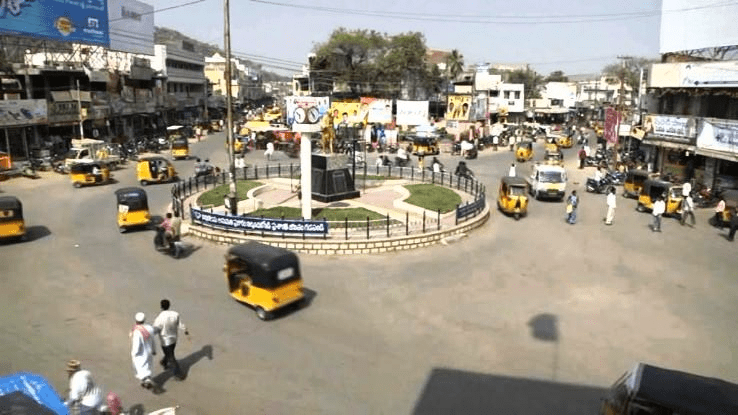
The generosity of the afternoon lent itself easily to the evening. Yet, the crude shavings of faith that one had to possess in order to understand life better in Mahbubnagar could not be left unheeded. For everything that she had prided herself on – the bravura, the spirit, the psychedelia – were of no use if she were no longer true to herself.
Had she been contained within the bubble of Kokapet and Narsingi (or deemed herself an Anglophile and called it the Financial District), life would have been easier to negotiate, and the bus to Narayanpet, and subsequently to Kosgi, would have passed her by. She would not have been mindful of the one-lane road that masqueraded as a highway, nor deign to appreciate the okra blooms that had only just been able to raise their heads out of penury.
***
Kodangal, further northwest, newly prominent only after the chief of the nobles had thrown careless remarks of his youth in a white bungalow sugarcoated with blankets of algae, often considered itself superior to Narayanpet. None of its inhabitants had made the journey north to see the prodigal sit on his gold-encrusted throne at a hall he had renamed the ‘house of the people’ from the ‘house of progress’; if their crops were left untended during the unsympathetic monsoons, they would not have had the heart to ask him to procure their paddy – or secure some pride. For the rest of the year, they would patiently wait for the farmer’s markets in Mahbubnagar to discharge the debts they had accrued while securing their daughters’ futures.
Their sons-in-law, often wedded to the real estate business, prided themselves on their proximity to the chief minister (”a son of the soil”) and forayed northeast to Vikarabad. The triangle of Mahbubnagar, Narayanpet and Kodangal did not appeal much to the gentry, who had set their eyes on nimble-footed and innocuous-looking techies from Gurgaon being a vehicle of growth for a future they were yet to see. In Vikarabad, fortified somewhat by the flakes of stone from Tandur, their requests for building resorts fell on deaf ears.
Protests that translated into fist fights were led by one lobby upon another; causing harm to the environment was brought up when the magistrate returned after his lunch of dalcha and baghaar-e-khaana. This culminated in the police outpost that overlooked the hills of Anantagiri, and from where the home guards would see the sunset, drinking cups of ill-begotten masala chai from Ahmed, the tea-seller who also serviced the government’s luxury resort, being burnt to rubble, leaving nine protesters dead; everyone in uniform survived. When the youth from Kodangal surveyed the damage the morning after, and managed to get onto the secure line the prodigal had given them on his visits back home, they were informed by a terse message from his private secretary’s secretary that the esteemed man of the people was abroad on holiday.
***
Having long been besotted by the memory of the esteemed Viqar-ul-Umrah – she had once swum in the pools of Chiraan Fort in the company of strangers – Vikarabad was next on her list. The Falaknuma was, as yet, outside her realm of understanding.
If you like my work, consider visiting my website to get in touch with more of my writing. You can follow me on X as well. Also, sign up for the newsletter to get regular updates coming your way. I would love to talk to you!


Leave a Reply