
When Alexander the Great faced his mutinous soldiers at the flooded Beas in western Punjab in 325 BC, and relented under great pressure to return home to Macedon, a glossy chapter in the history of India went unwritten. It is said that the young emperor brooded inside his tent even as his most trusted lieutenants revolted, and, overcome by homesickness, begged their master to turn back.
The prospect of facing the Nanda empire, which had five times as many troops as the Greeks themselves did, did not seem too appetising either, and Alexander’s move, prudent if not wise, saved India and the fertile Doab region from further bloodshed. This had, of course, occurred after he had humiliated the heroic Porus at the Jhelum and, in magnanimous fashion, reinstated him to the throne when spoken to with a similar dignity by the latter when about to be put to the sword.
“How do you expect me to treat you, now that you have been captured and your troops routed?” asked Alexander of Porus.
“As befits a king,” the proud Porus had replied.
***
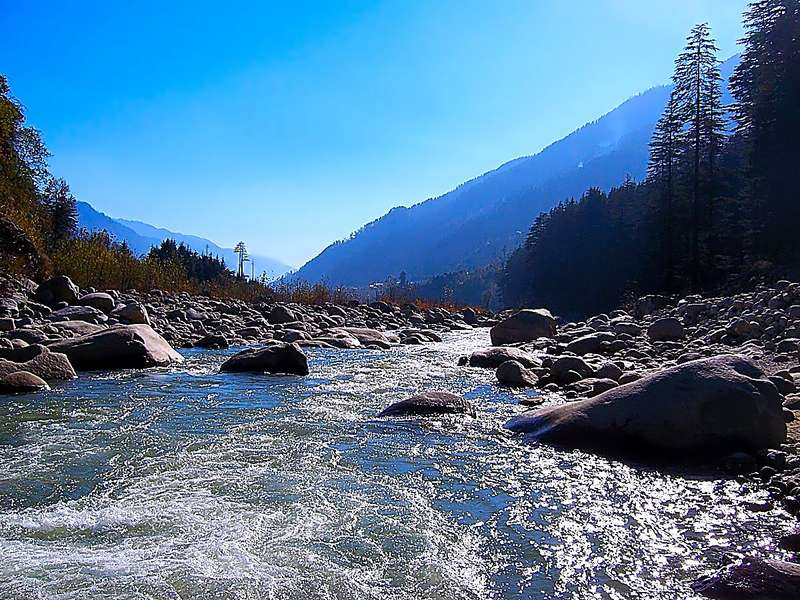
A similar dilemma was encountered by Babar, the first of the great Mughals, when he arrived from Kabul to take his spoils from the Lodhis, the reigning dynasty of Delhi, in 1526. His army, parched after years of campaigns across the dust bowls of central Asia, and arriving in the Indian northwest to defeat the Lodhis at a strategically manoeuvred feast that the battle of Panipat eventually became, sought to drink in the cool air of Kabul and eventually resume the battle for the throne of Samarkand, which Babar so fervently sought.
It was the month of May, the hottest in the subcontinent, and for a group of invaders just arrived from across the snow-laden Hindu Kush mountains in spectacular grandiosity, India could not have been a worse gift that the heavens had bestowed after winning a battle so steep, especially given the countless horde of idolaters and infidels that had yet to be encountered and treated as the one true God would want them be treated.
And hence rose another great mutiny in the camp of another great invader, but this time, the glossed chapters of Indian history would indeed change, for Babar would end up convincing his troops to stay put at their stations and entreat them of the glories to be had and the jewels to be captured from the land of Hind, famous across the world for its endless bounty.
(When, years later, he would be presented with the Koh-I-Noor diamond by his son Humayun, Babar would cautiously refuse, not least because the diamond, sourced from the mines of Golkonda near Hyderabad, carried the omen of either making its benefactor the ruler of the world, or setting him extinct from it altogether. Babar aspired to neither infamy.) Thus, Babar’s forces, forced into admiration for their leader’s just words, and put to shame by his exemplary behaviour in the face of trouble, would momentarily put their homesickness aside to share in the spoils of war, and eventually, go on to found one of the greatest dynasties in modern history.
***
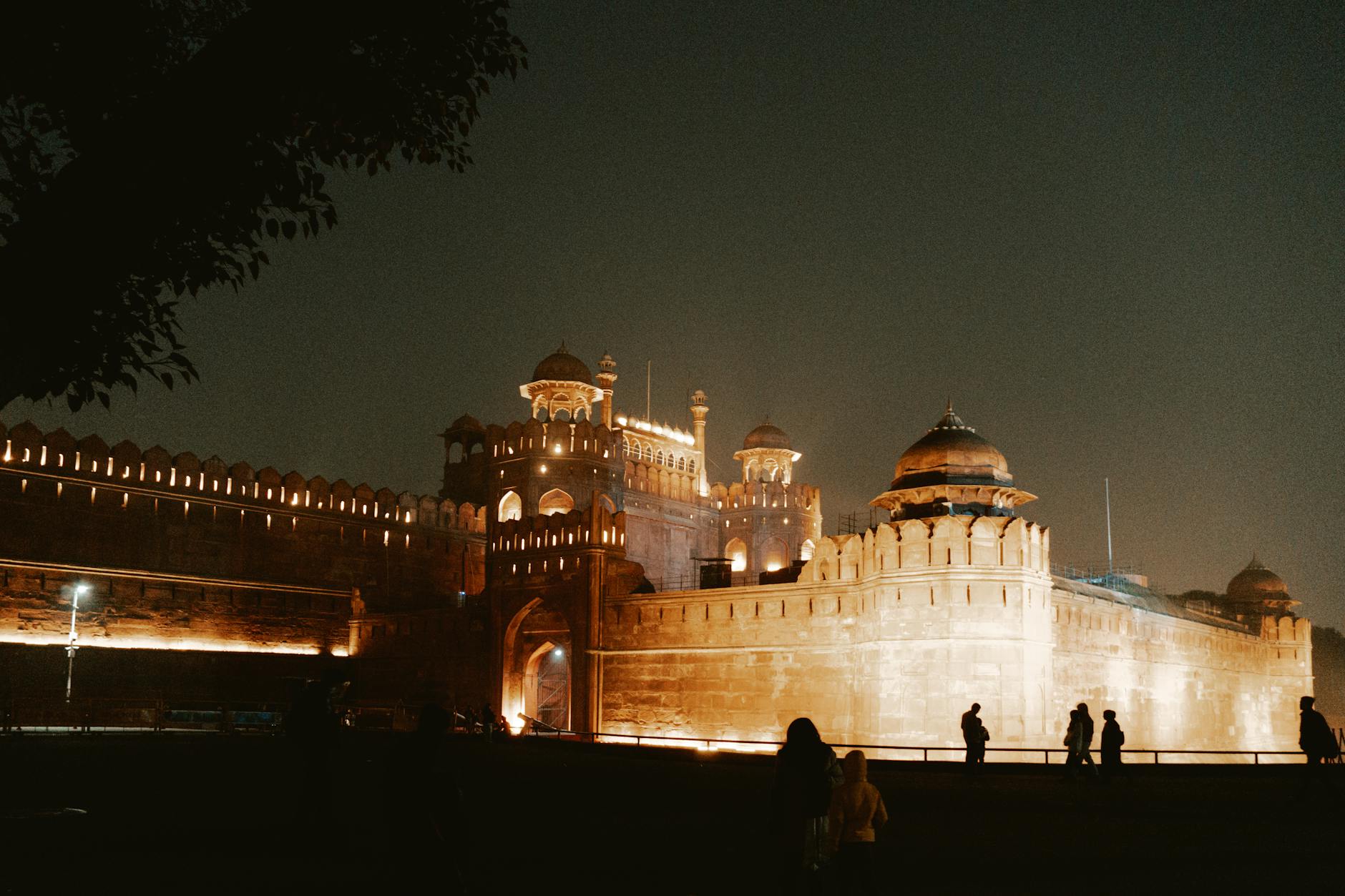
It would take another king from that dynasty, Shah Jahan, the aesthete, to commission the Red Fort, made entirely out of red sandstone in the heart of old Delhi, as well as the vast, many-terraced Jama Masjid standing tall almost exactly opposite it. And it would take the leader of India’s present dispensation, Narendra Modi, with a turban wrapped from left to right in Rajput-style to unfurl the national flag on the ramparts of the said fort, in a show of enviable piety and glamour today on the occasion of its 79th Independence Day.
For all the loose-leaf disregard shown by the Indian right towards the great Mughals, and to their founder Babar, in particular, for supposedly building a mosque on the site of a temple that marked Lord Rama’s birthplace in Ayodhya, its patrons have been unusually generous in their acceptance of Shah Jahan, Babar’s great-great-grandson, especially when espousing the case of the Taj Mahal, India’s greatest creation in forums abroad.
For all the hankerings that the Mughals – or invaders in general – get from components of the Indian right, who have been so meticulous in organising history in columns that satisfy their myopic desires, Shah Jahan has been left alone, almost as an aside, since, firstly, he showed few instances of temple-destroying behaviours usually attributed to invaders from the northwest, and since, more significantly, he gave them gifts of a kind that begets the soft power India has enjoyed in global political forums for centuries. It is not easy to do away with India’s past, and it is equally difficult to retreat to monuments that signify less of who we are, and lesser still of who we could have been.
Two of the greatest festivals in modern India, Independence Day and Republic Day, are celebrated in the Red Fort deep inside the old town of Shahjahanabad in Delhi, which bears the trademark of Indo-Islamic architecture as well as the remnants of a glorious, syncretic past that the Mughals incorporated. Loose talk is easy, but to replace the Red Fort in ceremonial obligations will take the Indian right – with its evident distaste towards Islam and every appendage it brought to the Indian subcontinent – to fight harder in evoking discussions that narrate a more homogeneous past that neither existed, nor ever will.
As we celebrate 78 years of independent India, and look forward to centuries of being a free nation unencumbered by memories of a haunted past that such homogeneity can induce, it is well within our rights to remember that it is in a syncretic, integrated and assimilated culture that our future lies. Happy Independence Day!
If you like my work, consider visiting my website to get in touch with more of my writing. You can follow me on Twitter as well. Also, sign up for the newsletter to get regular updates coming your way. I would love to talk to you!


 Soliloquy
Leave a comment