
This post is dedicated to the towns of Hue and Hoi An in central Vietnam. While I have already done a detailed post on Hue in the past – which can be accessed here – I have also included bits of my short visit to Hoi An in this one.
While both towns proclaim to be the jewel across the formerly known DMZ (Demilitarized Zone), Hue was the seat of the imperial family, while Hoi An was, for years, an important trading city owing to its close proximity to the coast.
Not to mention that one of Vietnam’s most important and prosperous cities, Da Nang, too lies closeby. Tu Duc, the last independent king of Vietnam, has his mausoleum on the outskirts of Hue, and despite the various challenges involved in getting there, it makes for a pretty sight.
The haunting nature of Tu Duc’s fatalistic poetry, and the melancholic rhythms of his appraisal of life made for good company as a steady drizzle accompanied me throughout the day.
I could not help but compare his legacy to that of the last independent king of India, who too was a romantic poet, but suffered in the hands of colonisers – Bahadur Shah ‘Zafar.‘ Tu Duc, of course, died in Hue, while Zafar was denied the right of even overlooking his beloved Yamuna in his dying days; accused of fomenting our first war of Independence, the octagenarian spent his last moments in faraway Rangoon in Burma.
It is while taking his final breaths that Zafar wrote this deeply touching couplet, in which ‘ku-e-yaar‘ literally translates to ‘the lane of my beloved’, but can be figuratively understood as Delhi, his home. To think that the emperor of India was reduced to not having the right of being buried in his beloved Delhi.
“Kitna hai bad-naseeb Zafar, dafn ke liye
Do gaz zameen na mili ku-e-yaar me”
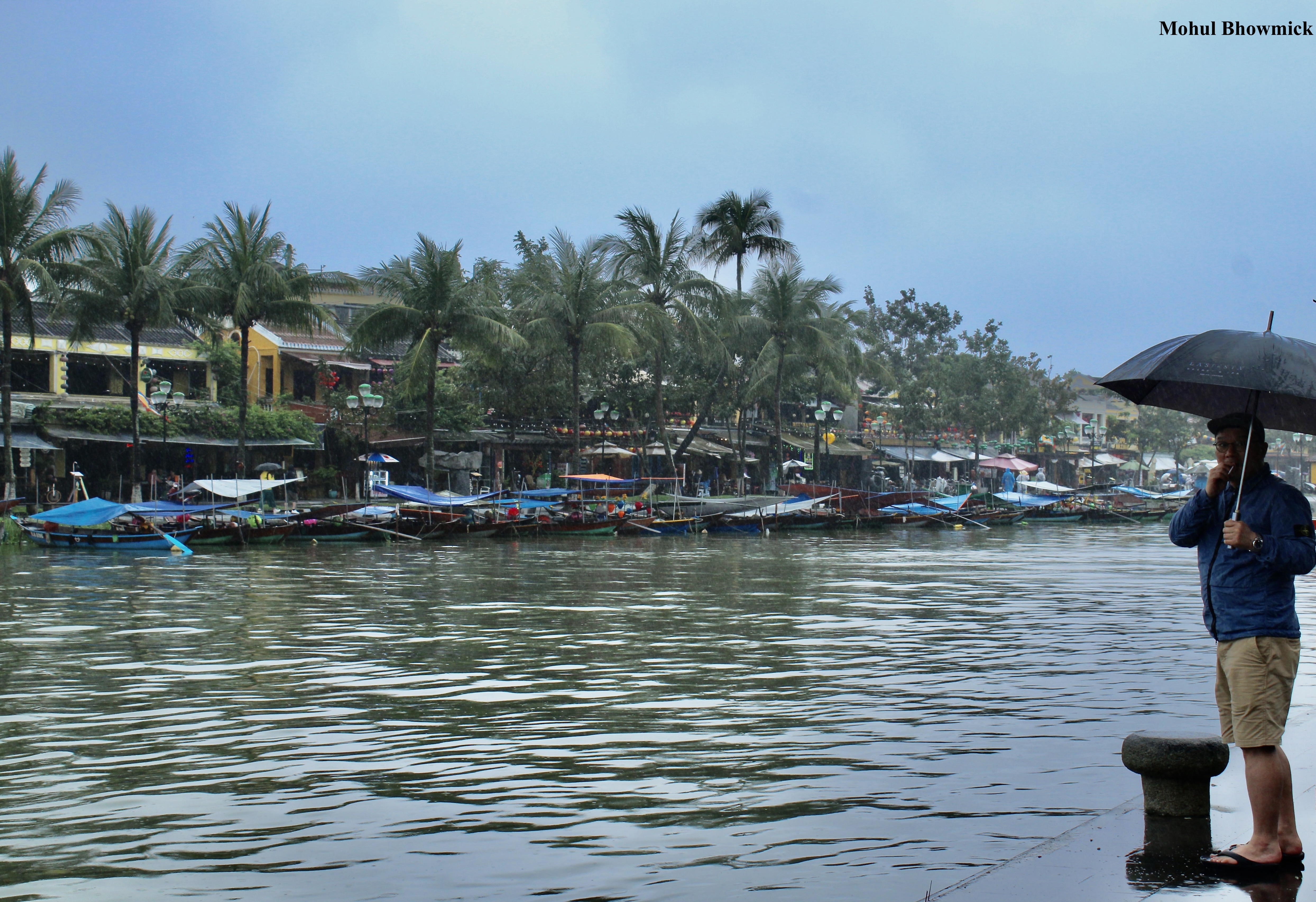
Hoi An presents a picture as pretty as a postcard to the unwary tourist. The drizzle accompanied me here as well, and it seemed to enhance the colours that would have otherwise seemed dull to the naked eye.






If you like my work, consider visiting my website to get in touch with more of my writing. You can follow me on Twitter as well. Also, sign up for the newsletter to get regular updates coming your way. I would love to talk to you!


 Soliloquy
Leave a comment