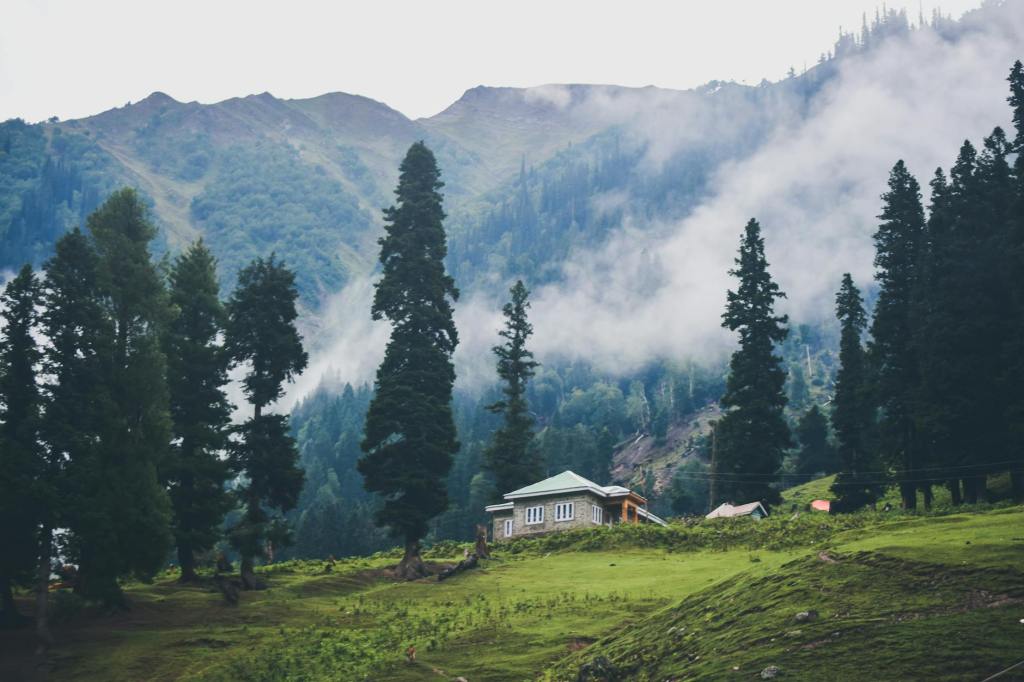
With Kashmir at the forefront, it seems as good a time as any to go back to the eponymous song of The Yellow Diary (TYD) from their debut EP Marz. While Led Zepellin won acclaim with their take on a song titled the same in Physical Graffiti, The Yellow Diary’s uninhibited lyrics and soulful rendition make their Kashmir a to-go for every rock-loving Indian. With all due respect to Zepellin, their Kashmir had nothing to do with India, and was, instead, based on a never-ending stretch of road in southern Morocco while signifying man’s search for something higher than himself.
TYD, meanwhile, focus on bringing out the paradox that the region is. Blessed with mountains that stretch long to the frontier between India and Pakistan and flowing with gilded rivers that know no beginning or end, Kashmir is truly the jewel in the subcontinent’s crown. Their Kashmir evokes a joint response while emphasising the difficulties of living in paradise at the same time.

“Kashmir, tera hua mere bina, toh kya tera?
Kashmir, mera bhi ho tere bina, toh kya mera?“
[If Kashmir were to become yours without me in your life, would it even mean anything to you? And vice-versa.]
While the meaning of this line, sung in the chorus, signifies human relationships stretching to make ends meet, it takes the Kashmir reference beyond the tried and tested. All of us wish to live in paradise, yet choose to seek only those parts that appeal to our more sensible, nuanced selves. What about the logical parts of our minds that know no reason and seek romance and pleasure for the sake of it? Spoken in clear terms, what would Kashmir mean to India were Pakistan not on the other side, and vice-versa?
Would all our pains have subsided had such a beautiful country, aptly called ‘Pak-staan’, translating to ‘The Land of the Pure’ in Urdu, not existed on the other side of our frontiers? Would we have been able to resist the temptation of subjugating Kashmir and its denizens as we were wont to have with a brute majority in the succeeding years? That the valley should remain virgin after transgressions of such a disorderly manner is apt for the lack of sacred space we have given it in postmodern times.

With what do we measure Kashmiris’ happiness? It goes beyond reasonable doubt that the logic that works in Bihar has no place in the dusty cupboards of the snow-filled vales of Gulmarg, and that the romance that the Jhelum offers makes little to no concessions to the gargantuan waters of the Godavari in coastal Andhra. If such ideas were to be kept in check, and absolute majoritarianism thwarted in order to arrive at a solution that was at once peaceful, beautiful and achievable, we would have been welcome in Kashmir after all.
TYD litter their magnum opus with
“Kahin tere-mere se hai bada koi
Likh rahaa har ghadi
Sabhi lamhen jinmein ham khud ko hai
Khud se hi bada samaj chal diye“
[There is something bigger than the recriminations that arise between you and me – something that smiles when seeing the moments in which we think of ourselves to be bigger than who we are.”]
And in that all-pervading smile, the smile of Buddhahood, the smile of the I, separate from the suspicion in ‘You’ is where our Kashmir lies.
A live performance of The Yellow Diary’s Kashmir in Delhi in 2021.
If you like my work, consider visiting my website to get in touch with more of my writing. You can follow me on Twitter as well. Also, sign up for the newsletter to get regular updates coming your way. I would love to talk to you!


 Soliloquy
Leave a comment