Earlier this year, I had the great fortune of backpacking across Indochina, starting with Vietnam. The country fascinated me with everything it had to offer, from its culture, traditions, heritage, history to its delectable cuisine. The people are some of the warmest I have known in life, and bely assumptions when commiserated upon for the grief they have had to suffer for centuries due to foreign power.
Almost everyone in Vietnam greets you with a smile, and is courteous beyond measure; this fact seems duly surprising especially given the turbulent recent history that the country has been through. That the Vietnamese still trust strangers – and foreigners at that – speaks volumes about their willingness to forgive and mend their wounds of the past quickly.
This post is dedicated to Saigon, the historical epicentre of the Vietnam war, and for long the haunt of journalists, diplomats and intellectuals. The city is also a major industrial hub and has, for long, earned the coveted position of the capital of the south of the country. While it did have that right when the country was divided in two in 1954, Hanoi became unified Vietnam’s capital after the Americans were finally defeated and ousted from their country in 1975.
Still, the historical importance that Saigon has in Vietnam is not lost on anyone, and can be clearly seen in the architecture the city sports so brashly. Both the French and the Americans did everything they could to destroy this metropolis and reduce it to rubble, but the Vietnamese ensured that their spirit could not be touched by insolent powers from the outside.
Today, Saigon – to many the very heart of Vietnam – stands as a monument to Vietnamese supremacy, ingenuity and capability for hard work. Most importantly, as it was remembered centuries ago, it retains its nom de guerre of being the ‘Paris of the Orient.’ From industries to shopping malls to cinema halls to public houses to coffee shops to modern hospitals and schools, this city can confound the visitor and leave them bedraggled. To any potential traveller, I would recommend at least a week to explore this queen city’s labyrinthine walls.
Here are some of my impressions of the city:
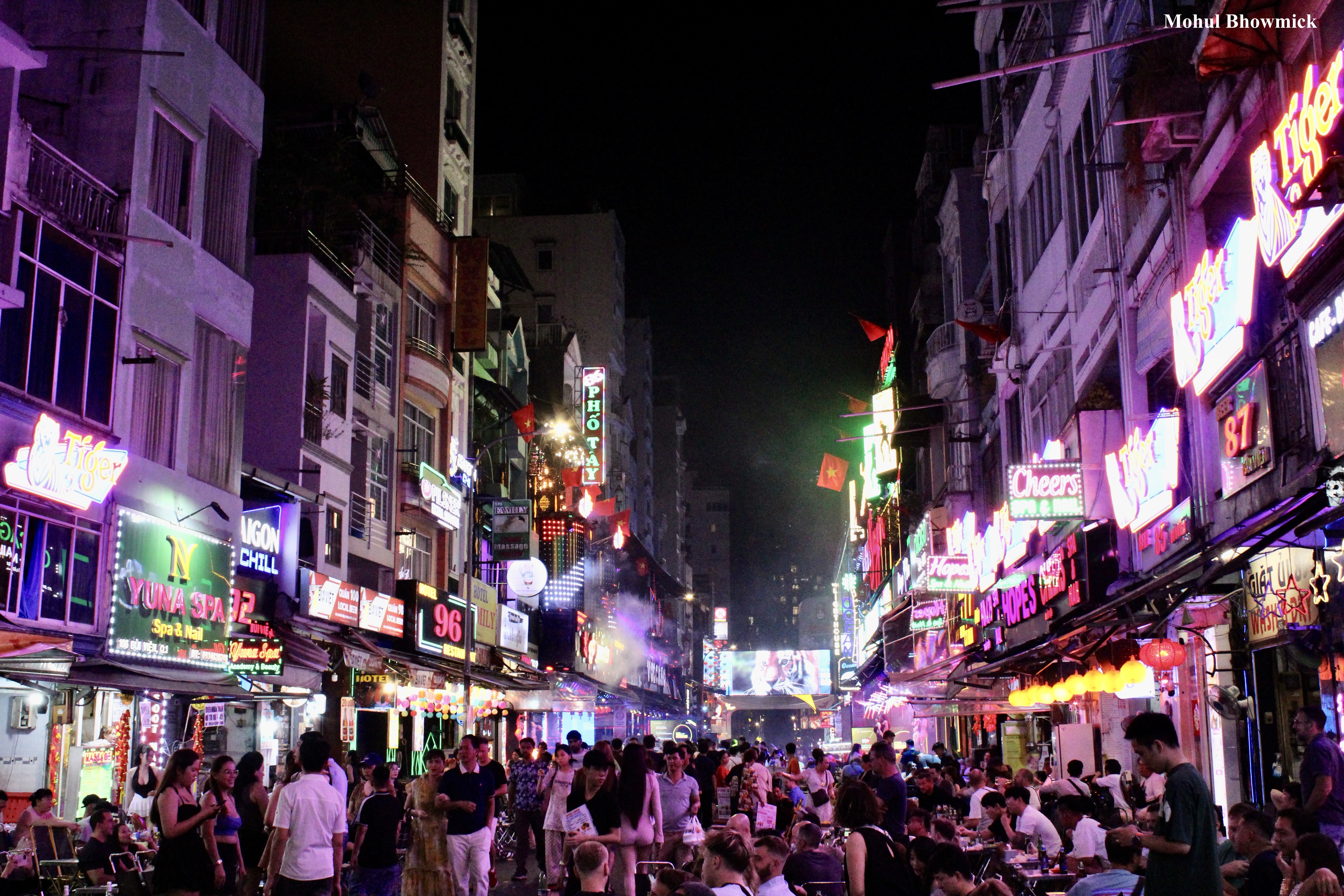
The renowned Bui Vien Walking Street of Saigon is bound to knock any traveller off their senses.
There is little that one cannot get their hands on at the Bui Vien Walking Street. Lined up with nightclubs and restaurants on each side, the street targets visitors who seem easy preys with their wide-eyed looks and fat wallets.
I had the good fortune of coming across a Vietnamese heavy metal band called DELUGE performing in Bui Vien; they boast of a female lead vocalist.
The Vietnamese coffee culture is ubiquitous. Drunk usually without milk but sugar, ca phe da is widely ordered on the streets where people of all ages and genders congregate to take breaks from their lives. For the visitor, ca phe sua, or coffee with condensed milk is recommended.
Taking a break in Saigon – the man takes precedence over the woman on the scooter seat.
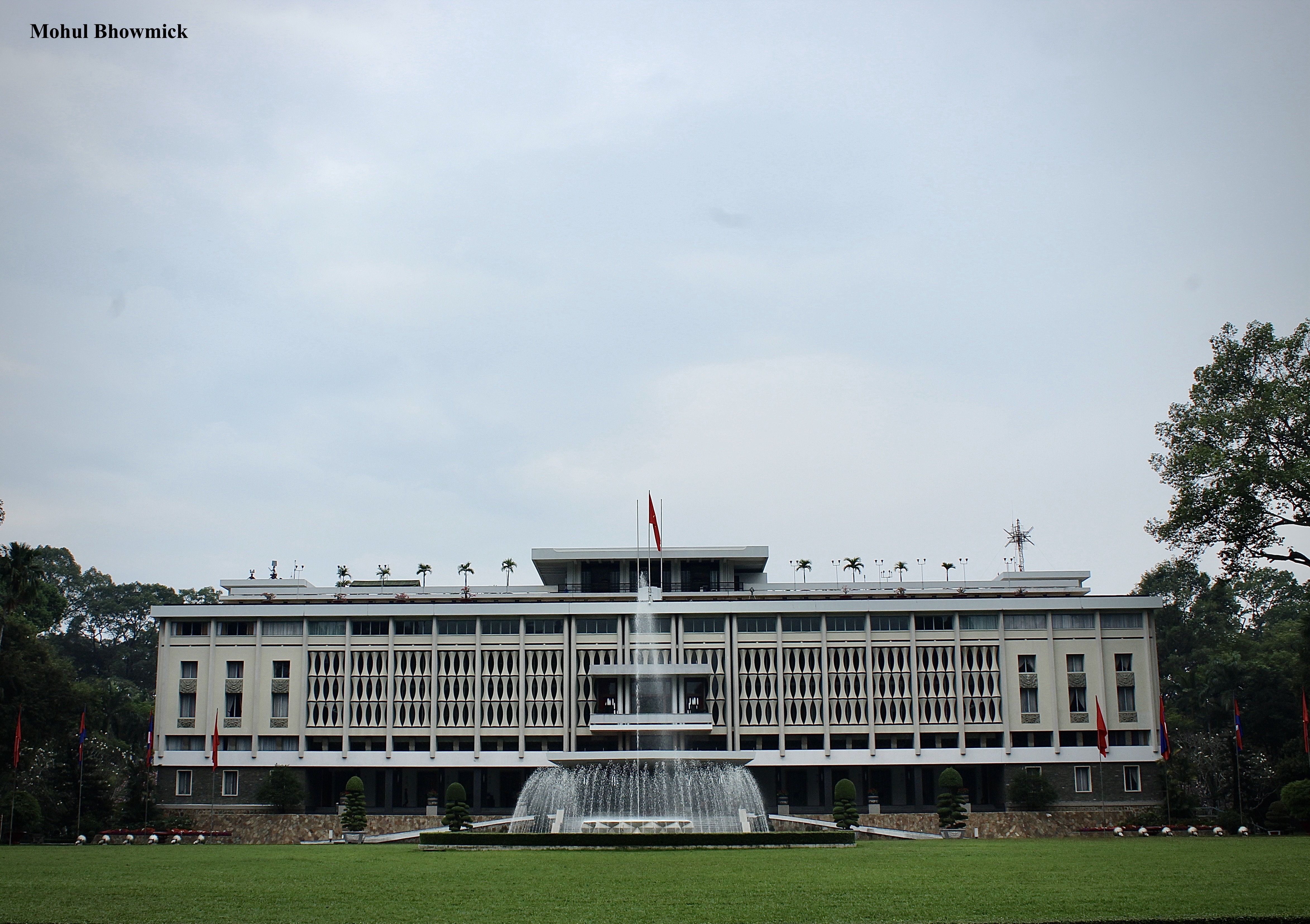
The Independence, or Re-Unification Palace in Saigon, whose gates the tanks of the North Vietnamese Army stormed on 30 April 1975 signifying the end of the American war and the fall of this city to the communists. This is where the president of South Vietnam used to live.
The Saigon Museum (currently called the Museum of Ho Chi Minh City) is an impressive French style building with balustrades that were once used to signify the colonial prowess. Today, it hosts exhibits about Saigon’s history, culture and heritage.
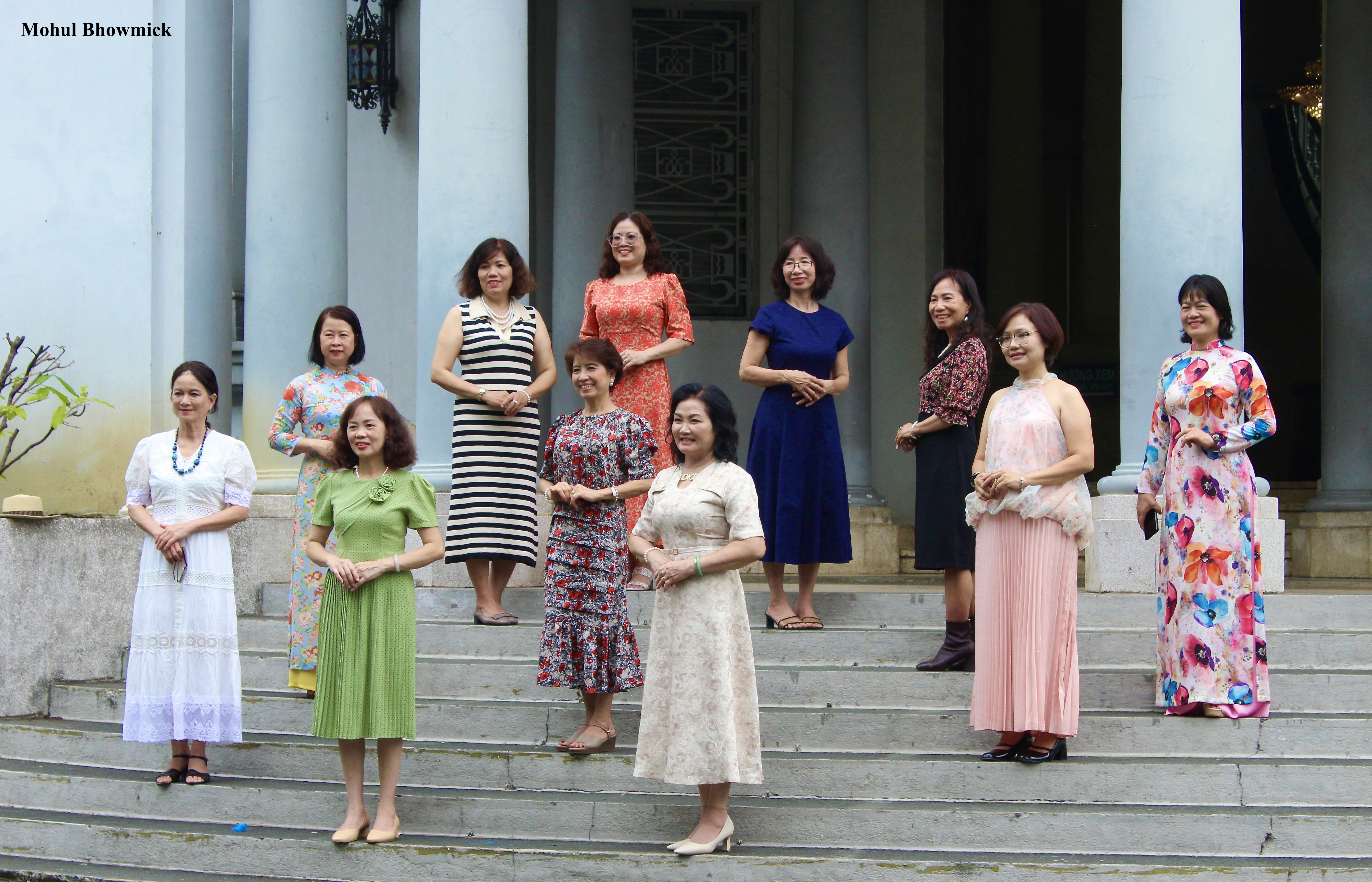
The Catholics of Vietnam are a significant minority in a country that is predominantly Buddhist. Here, their women pose in front of the national museum in Saigon. They are distinguished from the Buddhist Vietnamese in their choice of clothes – they usually discard the traditional aao dais in favour of long dresses.
Waiting for a chance to go up the rounding stairs inside the museum in Saigon.
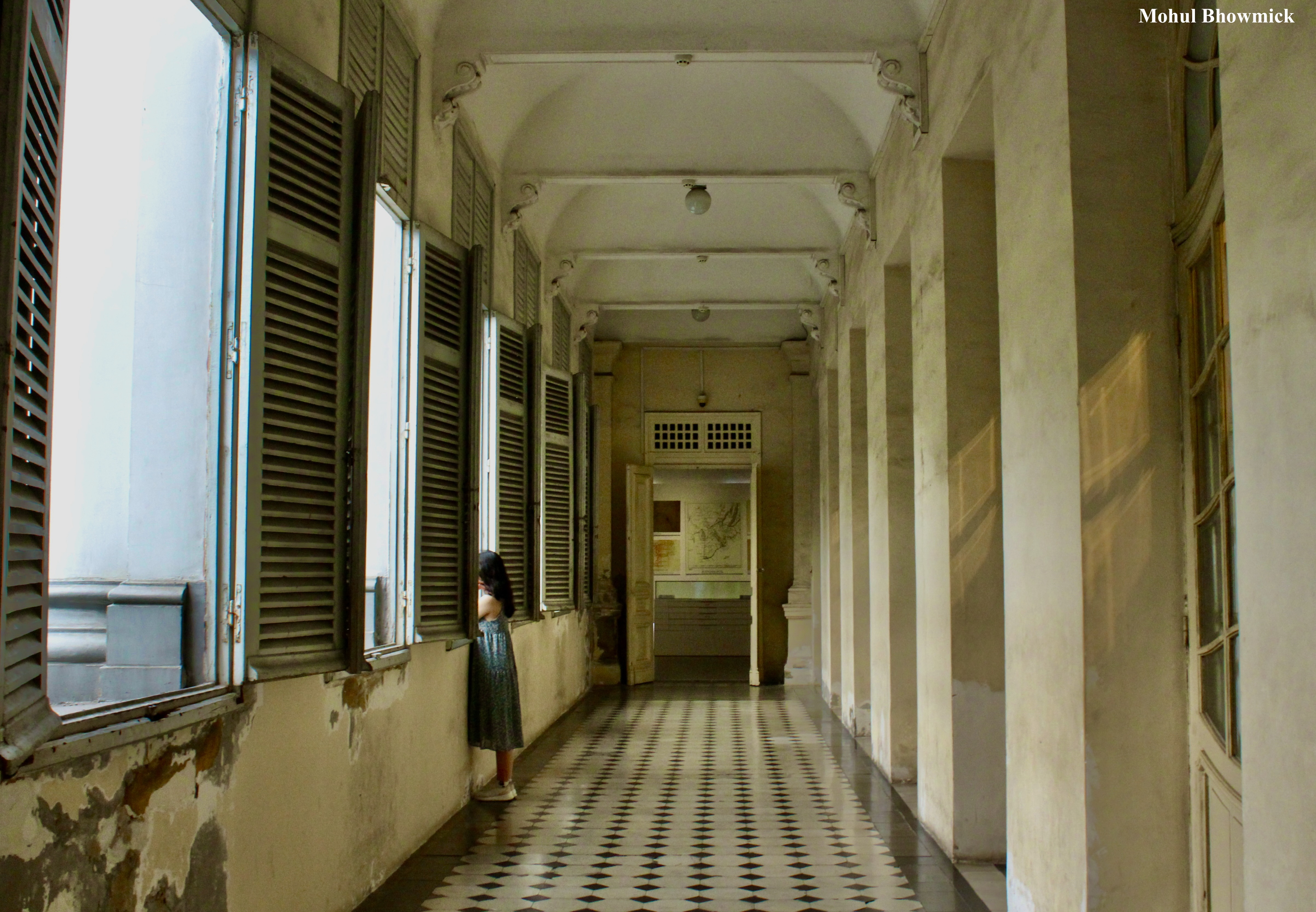
Looking out in hope as the sun’s last rays fill the centuries-old frayed walls of the museum.
An exhibit inside another fascinating museum in Saigon, the War Remnants Museum, showing perhaps the most famous image of the Vietnam War. Children run helter-skelter while being harrowed by American troops as napalm gets dropped by the latter onto Vietnam’s fields. This image became renowned as the ‘Napalm Girl’ referring to the young one in the centre of the photograph who is seen screaming in pain even as the chemicals take control of her body and burn her to death. Quite fittingly for the times, the American soldiers in the pictures stand apart and do nothing to help. Why? They were not there to help, but ‘bomb the Vietnamese back to the stone age’, as propounded by the General Curtis LeMay of the US Air Force.
The Saigon Opera House, a place of immense tranquility in the busyness of the Rue de Catinat.
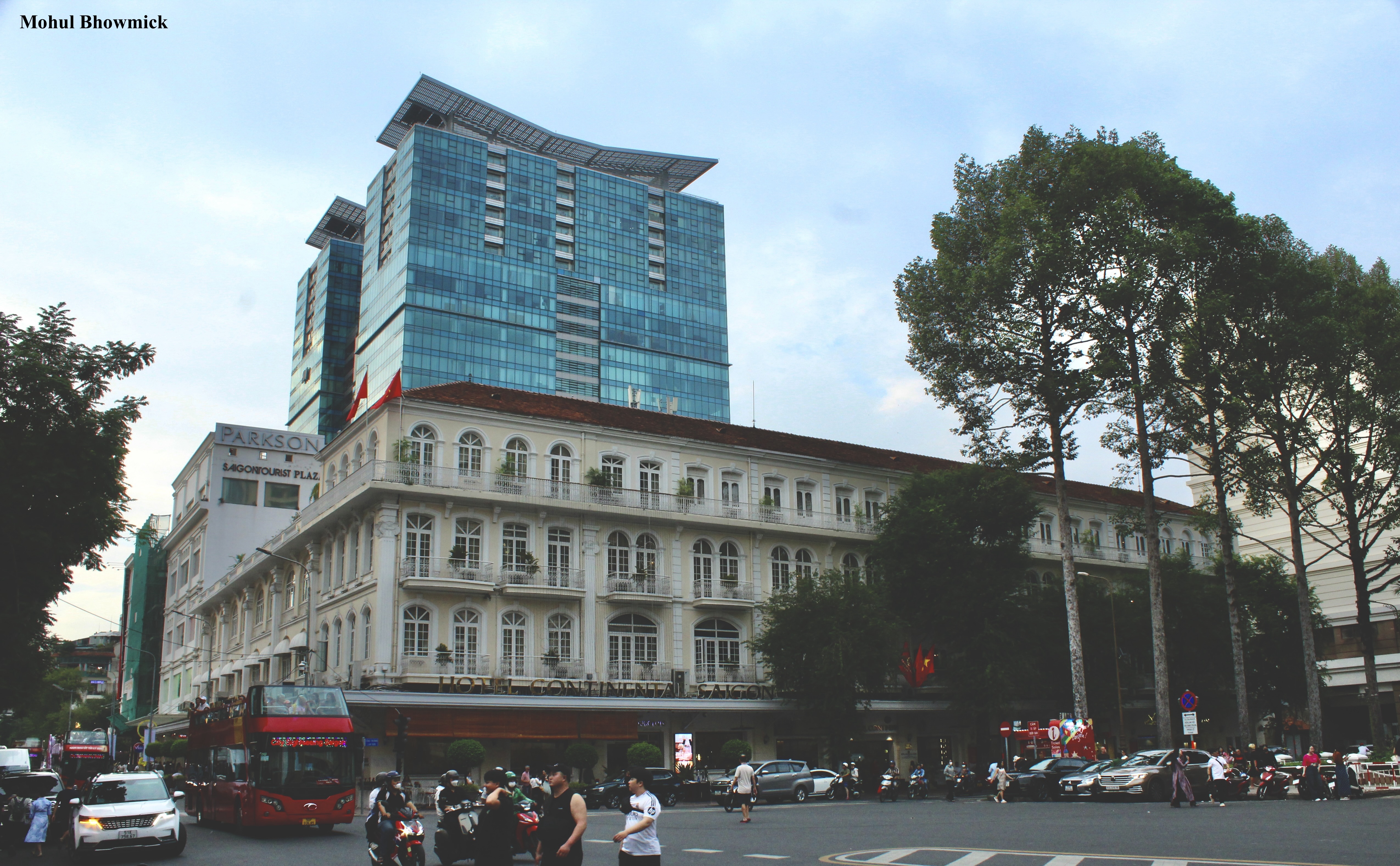
The world-famous Hotel Continental, where Graham Greene wrote most of his ‘The Quiet American’ and which also features as a prominent part of that selfsame novel, and later, film.
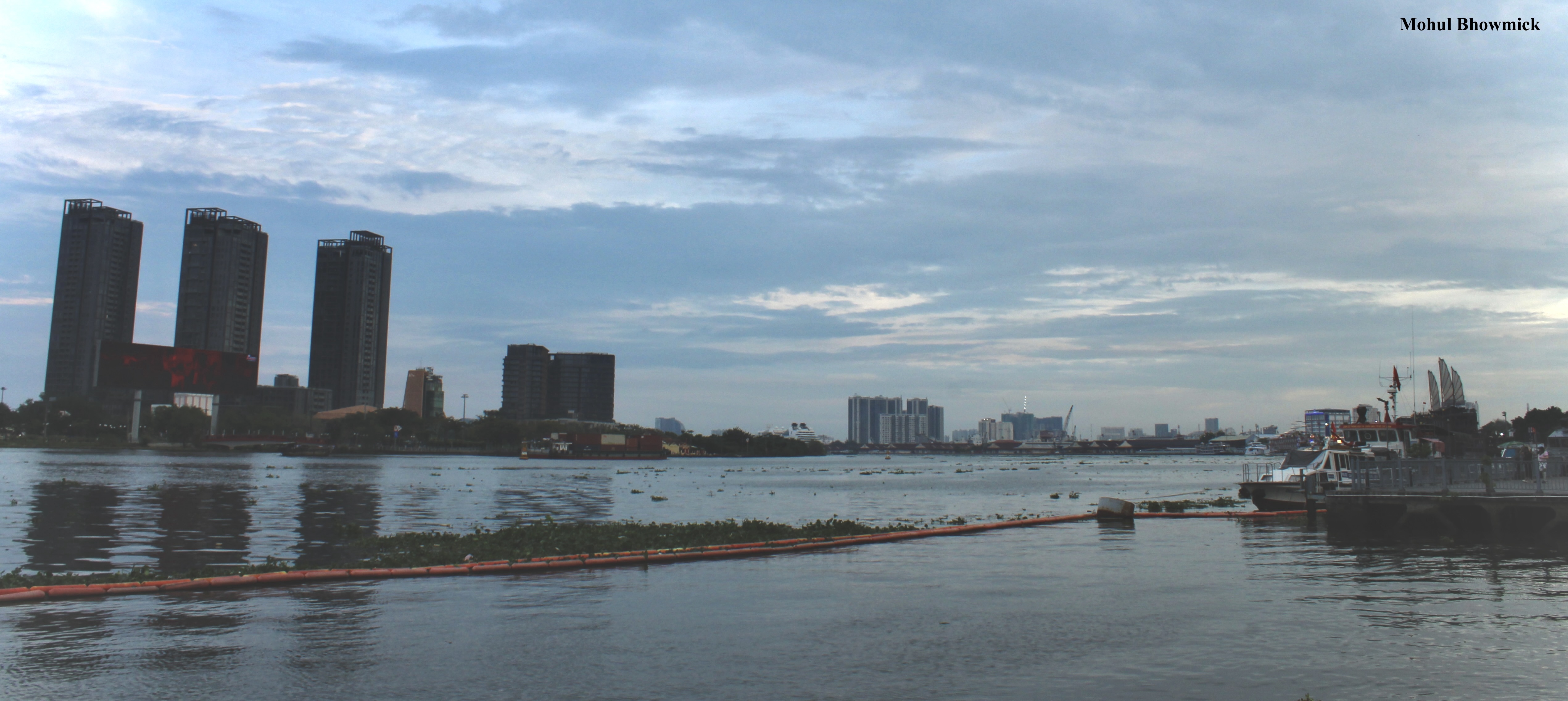
The skyline as seen while looking out over the river Saigon, on the banks of which the city is built.
It would not have been Vietnam if not for a father-son duo to ask the foreigner out for a cup of coffee, wave at him constantly and let him know how welcome he was in their country.
Equipment used: Canon EOS 1300D
If you like my work, consider visiting my website to get in touch with more of my writing. You can follow me on Twitter as well. Also, sign up for the newsletter to get regular updates coming your way. I would love to talk to you!
All rights reserved. No part of Soliloquy may be reproduced, distributed or transmitted in any form or by any means without the prior written permission of the author.









 Soliloquy
Leave a comment