
This essay was first published by In The Know Traveller under the title Insights From Kerala. It has been reproduced here in its entirety.
Day 01: Kochi
The sun hits you when you first walk out of the airport in Kochi; the heat that accompanies its piercing rays takes less than a second to materialise. The Arabian Sea had first made an appearance to the starboard side when we were airborne, forcing the pilot to swerve almost 180 degrees to the left while approaching the runway, ignoring the Naval base on Willingdon Island and pushing west of Aluva. I get a more intimate view of its immense nature later in the evening when I take the ferry, seductively called ‘the water metro’ to Fort Kochi. The church where the explorer Vasco da Gama was buried has closed by the time I reach, and yet I find enough meaning to parse for meaning in a charming seaside area filled with the smell of sardines and mirchi bhajjis.

The Malayalee smiles a lot, and the spectre of linguistic hypernationalism, indeed chauvinism, that haunts some of our more well-respected southern towns is invisible in Kochi. He is quick to adapt and improvise in English (of which he knows plenty) or Hindi (of which he is immensely proud) when put on the spot, and equally quick to apologise, much to my chagrin, when he comes up short in either. Despite being proud of his culture and the heritage it represents, the Malayalee is shorn far from the arrogance that replenishes the souls of others of Dravidian stock. His is a likeable lot who try sufficiently hard to be liked; their efforts to be of any assistance to the visitor make them well-endowed with the social graces of any generation.

Fort Kochi is exemplary – the word is albeit used all too often – and I am forced to slow down and be mindful of my footprints. Sunset over the main beach abutting the rocks is akin to what I remember from Pondicherry, a town on India’s southeastern coast that closely resembles it, and a half-hour goes by quickly in joyful contemplation of life’s mysteries. This tourist district is friendly for walkers – although the odd cow ruminating over the state of the world causes alarm – and I enjoy exploring its nooks and crannies.
Uncannily, it is a bookshop run by a family on Bastion Street that catches my fancy; I am tempted enough to overlook the vagaries that the humidity – exacerbated by the lack of fresh air – generates over a cup of tea with the proprietor, a lady who speaks knowledgeably about Narayana Guru, that saint to whom much of the modern-day caste movement owes its lifeblood. Fort Kochi reminds me deeply of the fort in Galle – the similarities are too hard to miss – except that the fried snacks popular here are dissimilar to the rolls in Ceylon which take considerable strength from refined flour.

Day 02: Varkala
I am partial to both Kochi and Varkala, and not least because I am returning to both these places for the second time. I was last at the latter in 2022, steeped in a period filled with memories. This time, I take an unreserved ticket on the early morning Trivandrum Mail from Ernakulam Town and spend a joyful few hours before disembarking. There is no better place to befriend the local than when he is off his guard, and there is no guard at all when he is struggling for a ledge to keep his bag on and balance his awnings in a moving train. All this while, the process of keeping his shoes free from dust as well as his starched white shirt from being untucked occupies his mind more than my questions about Kerala’s composite vegetarianism do. Ladies of high repute, some worthy officers in the state government’s agriculture department, do not shy away from sharing space with their male counterparts in the crowded train.

Nowhere in southern India does one see the intermingling of the sexes of the native race as one does in Kerala, while the findings brought to light by the Hema committee suggest a different idea altogether. Can two such realities exist at the same time? The thought braces my mind even as lush green bamboo and swaying coconut palms pass me by, as do Kottayam, Changanasseri and Kollam. Juicy Cafe in Varkala, to whose owner Nazar I had made myself so readily acceptable in 2022, has not changed one bit.
The dal vada, pazham pori and white sugar-sweetened tea in the evening revitalise the memories of a couple of years ago, although the shock one receives at seeing the sea from over the cliff is just as it was the first time. I have had the good fortune of being to most well-known seaside towns in India but the sheer fear that Varkala inculcates in him who has not known the sea previously is unmatched. The height creates the effect of darkness that few other flat-surface viewpoints do, and this village enjoys the effects such fame brings to its otherwise darkened and deeply tourist-less shores.

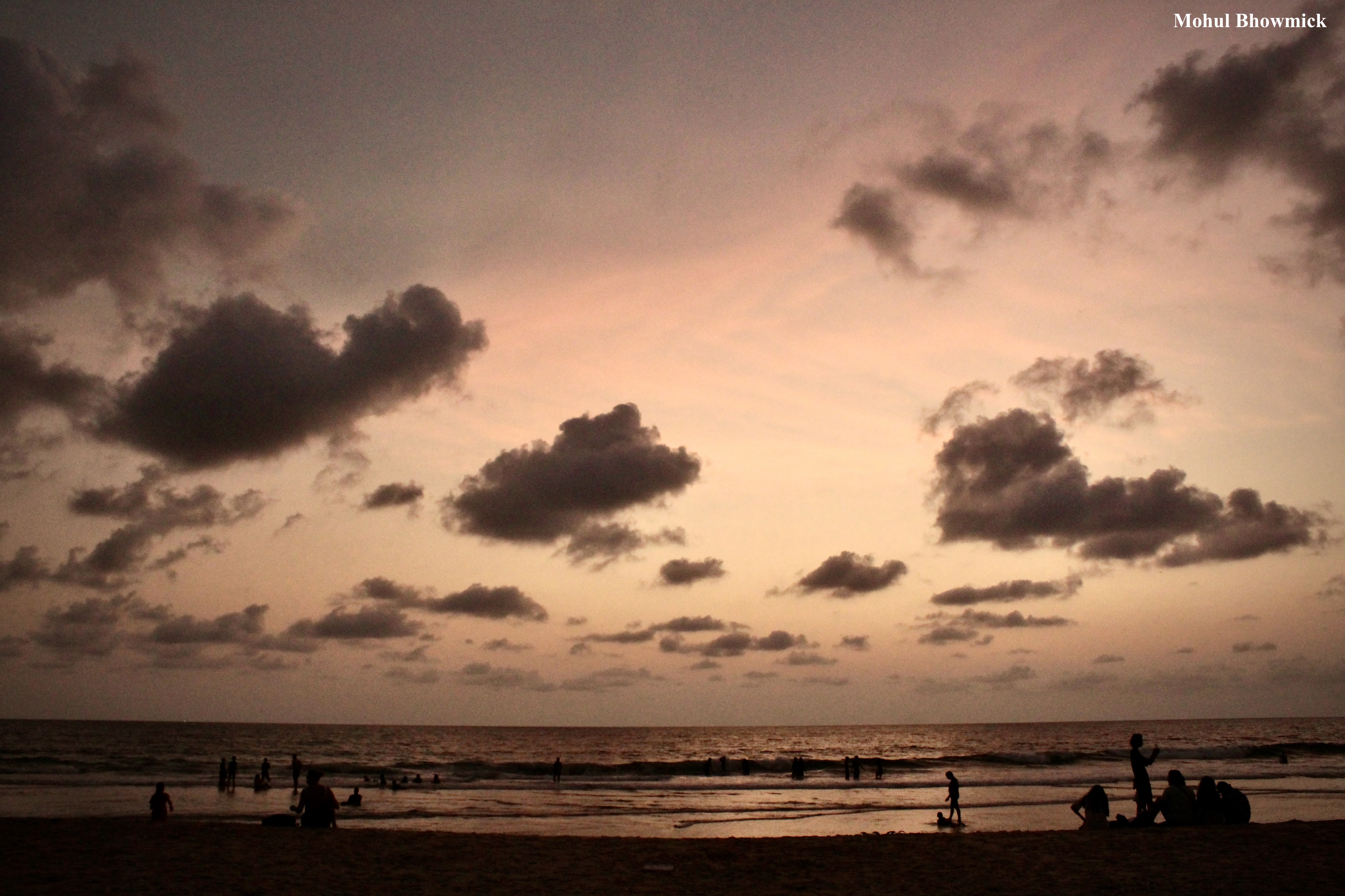
The sunset is equally compelling on the black sand beach, where one finds it easier to run than locate a place by the rocks to sit. The foreigners who prefer the tranquillity of Varkala over the garrulous nature of northern Goa like the way the sun sets over the western horizon; the beach off the cliff, on the other hand, forces one to twist his neck south-west to catch a glimpse of the great life force. I walk back accompanied by the stench of a rot that has not yet set in and I am greeted by the scene of a group of dogs arriving, bouquets in hand, to witness the burial of one of their ilk by a local good Samaritan, not a ways off from the village’s main junction.
They are all dressed in black, as they should be when they are mourning, and I concur that the departed was a rather well-respected member of their community. The next day, I run barefoot on the sand; I know of no freedom more encapsulating than this fleeting feeling I cannot yet hold on to. Yet, to be swerved by comparisons to Goa is only humane; I cannot let my curiosity turn into a more violent form of envy.
Day 03: Kochi
The hassle, heat and general lack of coherence make me take the unwise decision of booking myself on an AC compartment back to Ernakulam; I am greeted with a deafening silence as the train – meant to go all the way to Bombay – hums without any real sense of character. What the train lacks in character it makes up rather charitably in comfort, and for once, I do not complain of resting with my feet up and Kamala Das’ memoir in my hands. The Kerala countryside had seemed beautiful to me on the trip south from Ernakulam; today, it appears enchanting from inside the plate-glass windows that tint everything in their peculiar hues. I fail to keep count of the rivers, backwaters and lush green forests we cross – the swaying coconut palms accompanying me all this while – with the sea too making an appearance at Edava.
Simon Jonas, whom I had befriended in Varkala, makes the trip north with me on the train. He is destined for Alleppey and will get down a couple of hours later. Jonas interests me because he is an Indologist (or Orientalist, if that is the term) and despite my severe reluctance to befriend anyone on this trip, finds a way to breach my unusual recalcitrance. He has studied both the Buddha and Krishna and narrates the experiences he has had while in search of a meaning much deeper than what his hometown Zurich in Switzerland could offer.
My protests of there not being any sense in religion at all hardly affect him; like a veritable Buddha himself, he merely smiles and acknowledges my infantile expressions. He tells me of a cold autumn night, when he had taken LSD and mescalin to escalate a sense of experience that was built from intuition and not intellect and come to witness the plethora that too much inward-looking invariably creates. Jonas stutters to say whether it was God or his own nature that he had witnessed that night, deprived of the hard labour that ascetic discipline usually brings.

Lunch of the most delightful traditional fare served on a banana leaf outside Ernakulam station is only the precursor to what lies ahead of me this evening; bypassing all odds, Hyderabad FC defeat Kerala Blasters 2-1 in a stunning come-from-behind football match. To breach Kaloor, that fortress of southern India, is akin to perhaps what Akbar did to Chittorgarh, although a controversial decision from the referee is enough to sway the decision in my team’s favour this evening.
The 15,000 supporters who turned up to witness this grand event are sadder than I had expected but the mini earthquake the stadium witnessed when the Blasters scored their sole goal of the match speaks volumes of the sheer character of the Malayalee people and the influence this sport has upon them. When I go home tomorrow, I shall only remember the generosity of the pazham pori vendors.
You can also read this essay here.
If you like my work, consider visiting my website to get in touch with more of my writing. You can follow me on Twitter as well. Also, sign up for the newsletter to get regular updates coming your way. I would love to talk to you!


 Soliloquy
Leave a comment